
Introduction: The Year of Mobile Evolution
Every year, mobile technology pushes boundaries — and 2025 is no exception. From AI-powered phones and foldable designs to smarter apps and greener manufacturing, the mobile world is evolving faster than ever.
This year’s trends are about efficiency, personalization, and privacy. The modern smartphone is no longer just a device; it’s an ecosystem that connects your digital identity, finances, entertainment, and security.

In this guide, we explore the top mobile trends to follow in 2025.
1. AI Takes Over Everyday Mobile Tasks
Artificial intelligence has officially gone mainstream. AI now powers everything — from text prediction to photo editing and personalized recommendations.
Key areas where AI is transforming smartphones:
- Camera intelligence: Automatic scene detection, real-time object tracking, and noise reduction.
- Smart assistants: Contextual suggestions and natural voice recognition.
- System optimization: Dynamic power management and adaptive performance tuning.
In 2025, expect more phones to feature on-device AI, reducing reliance on the cloud and improving privacy.
2. Foldable and Rollable Phones Go Mainstream
Foldable phones are no longer experimental — they’re becoming a standard category.
Manufacturers are improving hinge durability, battery longevity, and app optimization for multi-screen layouts. Meanwhile, rollable displays are entering the market, offering flexible screen expansion for productivity and gaming.
These innovations hint at a near future where users can switch between compact and tablet-like modes instantly, without compromising on performance.
3. Privacy and Security Become Selling Points
Users are more privacy-aware than ever. The rise of privacy-focused browsers, ad blockers, and data control settings proves that convenience alone is no longer enough.

Companies now compete on how well they protect user data. Android and iOS are introducing:
- On-demand permission management.
- Transparent app tracking reports.
- Localized AI processing to minimize data sharing.
Simple, privacy-first tools like this website exemplify this movement — providing secure, login-free functionality for downloading and managing media without storing personal data.
4. App Ecosystems Are Getting Smarter
Apps are becoming more integrated across devices and platforms. Cross-platform synchronization now extends beyond phones to include smartwatches, cars, and home devices.
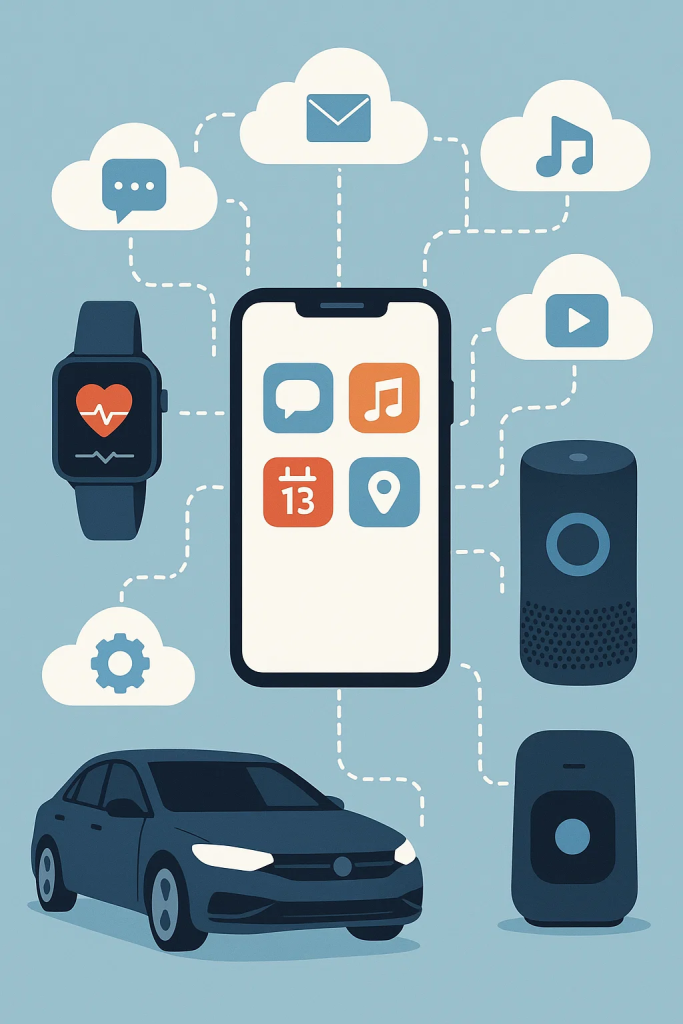
In 2025, expect apps that automatically adapt interfaces depending on screen size and device context — delivering a seamless user experience across the entire ecosystem.
5. The Rise of Eco-Friendly Smartphones
Sustainability is reshaping the mobile industry. Brands are investing in recyclable materials, modular components, and longer support lifecycles.
Key trends include:
- Replaceable batteries and repair-friendly designs.
- Biodegradable packaging.
- Energy-efficient chipsets reducing environmental impact.
This green shift appeals to eco-conscious consumers while helping companies meet regulatory sustainability targets.
6. 5G Expansion and the Path to 6G
While 5G continues to roll out globally, attention is already turning toward 6G research and development.
2025 will see:
- Broader 5G adoption in rural regions.
- Affordable mid-range 5G smartphones.
- Early prototypes of 6G systems focusing on ultra-low latency.
These advancements promise smoother streaming, faster cloud access, and enhanced real-time communication for both personal and enterprise users.
7. Mobile Payments and Digital IDs
Digital wallets have replaced physical cards for millions of users. In 2025, expect more countries to adopt mobile-based identity verification systems, including digital driver’s licenses and passports.
Meanwhile, near-field communication (NFC) and QR-based payment systems are expanding into public transport, events, and cross-border commerce.
With convenience comes risk — so users must balance innovation with secure tools and cautious habits.
8. Immersive Mobile Experiences with AR and VR
Augmented reality (AR) is finally living up to its potential. From live filters to AR shopping, mobile AR is now practical and engaging.
Tech giants are developing lightweight AR glasses that integrate seamlessly with smartphones, while mobile games are blending virtual environments with real-world maps.
As a result, developers are creating mixed-reality ecosystems that merge entertainment, education, and commerce — all powered by mobile devices.
9. Smarter Media and File Tools
The growth of content creation has driven demand for efficient media utilities. Users now expect apps that can download, compress, edit, and share without heavy installations or subscriptions.

Web-based solutions fit perfectly into this landscape — offering secure, fast, and lightweight functionality without compromising on user privacy or device performance.
This shift marks a broader trend: people want simple, direct tools instead of bloated apps filled with ads and trackers.
10. Insights from TechRadar
According to TechRadar, 2025 is a defining year for the mobile industry. The publication highlights five key directions shaping innovation:
- AI as a standard component in every device.
- A return to durable, repairable hardware.
- Enhanced battery life through new silicon materials.
- Cross-device integration driven by ecosystem design.
- Privacy as a top-tier product feature, not a bonus.
TechRadar predicts that brands able to combine innovation with transparency will dominate the next phase of mobile development.
Conclusion: The Future Is Personal and Responsible
The 2025 mobile landscape is smarter, greener, and more user-centric than ever. From AI-powered creativity to privacy-first tools, the focus has shifted toward empowering the user rather than exploiting their data.
The smartphone’s future is not about hardware specs alone — it’s about trust, sustainability, and intelligence that adapts to your lifestyle.
Staying ahead of these trends means understanding not just what your phone can do, but how it does it — securely, efficiently, and responsibly.